
Life Style
Çievri: A Modern Philosophy for Balanced Living

Introduction
In a world that feels faster, louder, and more fragmented each day, çievri offers a refreshing alternative. Rather than pushing people toward endless hustle, it introduces a rhythm of sustainable progress. At its core, çievri is about balance—between ambition and rest, technology and nature, independence and connection. Because modern life often rewards speed over stability, many individuals feel overwhelmed. That’s precisely where çievri becomes powerful.
Instead of promoting extremes, this philosophy encourages thoughtful cycles of growth and recovery. As a result, people don’t just achieve goals—they maintain them. Throughout this article, you’ll explore the meaning of çievri, its core principles, its real-world applications, and practical ways to adopt it in daily life. By the end, you’ll understand why this balanced approach is not only relevant today but essential.
Will You Check This Article:Amanda Kate Lambert: Art, Legacy, and Life Story
What Is Çievri?
Çievri can best be described as a holistic framework for sustainable growth. Although the concept feels modern, its roots echo timeless wisdom about rhythm and moderation. Essentially, it recognizes that life moves in cycles rather than straight lines.
While traditional success models emphasize constant upward momentum, çievri embraces natural fluctuations. Periods of intense effort are followed by moments of reflection. Likewise, achievement is paired with restoration. Consequently, growth becomes durable instead of exhausting.
More importantly, çievri shifts the definition of success. Instead of chasing short-term wins at any cost, it prioritizes long-term well-being. That subtle shift changes decision-making across every area of life.
Core Principles of Çievri
Understanding çievri requires examining its foundational pillars. Each principle reinforces the idea that sustainability outperforms intensity over time.
Balance Over Extremes
Modern culture glorifies extremes. People are often told to work harder, grind longer, and sacrifice more. However, extreme patterns rarely last. Over time, burnout replaces motivation.
By contrast, çievri promotes strategic balance. It acknowledges that rest is not laziness—it’s preparation. For example, athletes schedule recovery days to prevent injury and improve performance. Similarly, professionals who allow mental breaks often produce clearer, more innovative work.
Therefore, balance is not weakness. Instead, it becomes a deliberate performance strategy.
Cyclical Growth
Unlike linear growth models that demand constant acceleration, çievri respects repetition and refinement. Growth happens in loops: learn, apply, evaluate, adjust, and repeat. Through each cycle, understanding deepens.
Consider creative professionals. Writers draft multiple versions before finalizing a piece. Designers iterate repeatedly before reaching clarity. In each case, progress emerges from revisiting and refining ideas.
Because of this cyclical nature, setbacks are no longer viewed as failures. Instead, they become necessary feedback within the process.
Intentional Action
Busyness often disguises inefficiency. Although many people equate activity with productivity, çievri emphasizes purposeful movement. Before taking action, it encourages reflection: Why does this matter? Does it align with long-term stability?
As a result, energy is directed more wisely. Decisions feel calmer. Momentum becomes controlled rather than chaotic. Over time, intentional action compounds into meaningful progress.
The Origins and Evolution of Çievri
Although çievri feels contemporary, similar ideas have appeared throughout history. Ancient philosophies emphasized moderation, reflection, and harmony. Nevertheless, modern life presents unique challenges—digital overload, constant comparison, and blurred work-life boundaries.
Because of these pressures, çievri adapts traditional wisdom to present-day realities. It does not reject ambition or technology. Instead, it advocates conscious integration. People can pursue innovation while still protecting their mental clarity.
Over time, this adaptability has allowed çievri to influence diverse areas—from workplace culture to personal development strategies.
Practical Applications of Çievri in Daily Life
Theory alone isn’t enough. Fortunately, çievri translates smoothly into everyday habits.
Personal Well-Being
To begin with, focus on energy management rather than time management. Instead of filling every hour, build space between commitments. Even small pauses—like five minutes of reflection—can reset mental focus.
For instance, replacing late-night screen time with quiet reading improves sleep quality. Similarly, scheduling weekly reflection helps clarify priorities. Gradually, these adjustments create measurable improvements.
Professional Environments
In professional settings, çievri reshapes productivity expectations. Rather than measuring success purely by output volume, teams evaluate sustainability and impact.
Consequently, workplaces that adopt balanced pacing often experience stronger morale. Employees remain engaged because they feel supported rather than drained. Furthermore, projects benefit from thoughtful planning instead of rushed execution.
Relationships and Community
Healthy relationships also follow natural rhythms. There are moments for deep discussion and moments for shared silence. Through presence and attentiveness, connections strengthen organically.
Additionally, communities function best when support flows in cycles. At times, you lead. At other times, you receive guidance. Recognizing this exchange fosters resilience and trust.
Çievri Compared to Traditional High-Intensity Models
To clarify the difference, consider the comparison below:
| Aspect | High-Intensity Model | Çievri Approach |
|---|---|---|
| Productivity | Constant output | Cycles of effort and recovery |
| Growth Pattern | Linear and aggressive | Cyclical and adaptive |
| Success Focus | External achievement | Sustainable fulfillment |
| Work-Life Balance | Frequently compromised | Intentionally preserved |
| Decision Style | Reactive and urgent | Reflective and aligned |
As shown above, çievri does not eliminate ambition. Instead, it structures ambition within sustainable boundaries.
Çievri in Creativity and Innovation
Creativity thrives when space exists. If the mind is overloaded, imagination contracts. Therefore, çievri supports creative output by protecting mental breathing room.
Artists frequently experience slower seasons. Rather than labeling these phases as failures, çievri reframes them as incubation periods. During these quieter cycles, ideas mature beneath the surface.
Similarly, innovation in business often emerges through iteration. A product prototype is tested, evaluated, refined, and reintroduced. Each revision strengthens the final outcome. In this way, cyclical progress becomes a competitive advantage.
Addressing Common Misconceptions
Despite its strengths, çievri is sometimes misunderstood. Some critics assume balance reduces drive. In reality, sustainability enhances long-term performance.
Others believe it applies only to wellness routines. However, its principles extend into finance, education, leadership, and strategic planning. Anywhere durability matters, çievri adds value.
Most importantly, this philosophy requires discipline. Pausing intentionally can be harder than pushing forward impulsively. Nevertheless, that pause often prevents costly mistakes.
How to Begin Living the Çievri Way
Adopting çievri does not require dramatic lifestyle changes. Instead, start by observing patterns. Notice where exhaustion replaces clarity. Identify where urgency overrides intention.
Next, introduce a small adjustment. Perhaps establish clearer work boundaries. Alternatively, dedicate one evening weekly to reflection. Over time, consistency builds momentum.
A simple cycle can guide the process:
Pause.
Reflect.
Act intentionally.
Evaluate results.
Adjust thoughtfully.
By repeating this rhythm, sustainable growth becomes second nature.
Long-Term Impact of Çievri
Over months and years, the effects of çievri compound. Balanced effort reduces burnout risk. Intentional decisions minimize regret. Cyclical reflection strengthens resilience.
Think of a garden. Continuous harvesting without nurturing soil depletes nutrients. However, rotating planting and resting seasons ensures ongoing yield. Likewise, life flourishes under thoughtful pacing.
Organizations that embrace sustainable rhythms often report improved retention and stronger collaboration. Individuals, meanwhile, experience steadier emotional well-being and clearer thinking.
Çievri in a Rapidly Changing World
Today’s environment evolves quickly. Technology advances. Expectations rise. Information multiplies daily. Because of this acceleration, structured balance becomes critical.
Instead of reacting to every opportunity, çievri encourages alignment-based decisions. Rather than fearing setbacks, it frames them as feedback loops. Consequently, adaptability replaces anxiety.
Although challenges remain inevitable, this mindset strengthens response capacity. Stability emerges not from control, but from rhythm.
Conclusion
Çievri offers a powerful framework for sustainable progress in a demanding world. By prioritizing balance over extremes, embracing cyclical growth, and committing to intentional action, it reshapes how success is defined.
Throughout this article, we explored its origins, practical applications, comparisons with high-intensity models, and long-term impact. Ultimately, the philosophy reminds us that endurance matters more than short bursts of intensity.
Start small. Adjust gradually. Protect your energy deliberately. When effort aligns with sustainability, achievement becomes lasting rather than draining. In an age defined by speed, çievri stands as a steady and strategic alternative.
Frequently Asked Questions (FAQs)
1. What does çievri mean in simple terms?
Çievri represents a balanced, cyclical approach to growth and living. It prioritizes sustainability over constant intensity.
2. Is çievri suitable for professional environments?
Yes. Many workplaces benefit from its structured pacing and emphasis on long-term performance stability.
3. How can beginners practice çievri daily?
Start by adding intentional pauses and weekly reflection. Small, consistent adjustments create meaningful change.
4. Does çievri discourage ambition?
No. It supports ambition while ensuring it remains sustainable and aligned with personal well-being.
5. Why is çievri relevant today?
Because modern life promotes burnout and overload, çievri provides a balanced framework for long-term resilience.
Introduction
Sova is a modern mental wellness application designed to help users build confidence, reduce anxiety, and reshape their mindset through daily affirmations and personalized audio experiences. Available on the Apple App Store, Sova focuses on helping people reprogram negative thought patterns by using structured affirmations, calming soundscapes, and smart audio customization tools. In a time when stress, overthinking, and burnout have become common challenges, Sova offers a simple yet focused solution for strengthening inner dialogue and emotional resilience.
If you are curious about how Sova works, what makes it different from other affirmation apps, and whether it is worth trying, this detailed guide explains everything clearly. From features and usability to real-life benefits and practical applications, you will get a complete understanding of the app and its purpose.
Will You Check This Article:Kinervus: Adaptive Intelligence in Motion
What Is Sova and What Is Its Main Purpose?
Sova is a health and fitness category app that centers around daily affirmations and guided audio experiences. Its main goal is to support mental wellbeing by encouraging consistent positive self-talk. The idea behind the app is simple: when you repeatedly expose your mind to constructive and empowering statements, your beliefs and emotional patterns gradually shift.
Unlike general meditation apps that focus heavily on breathing exercises or long guided sessions, Sova emphasizes short, targeted affirmation mixes. These mixes are designed to influence the subconscious mind, especially during relaxed states such as before sleep or early morning wake-up moments.
The app is developed to work smoothly within the Apple ecosystem and supports devices like iPhone and iPad. It also integrates with Apple Health, allowing users to track mindfulness-related data alongside other wellness metrics.
How Sova Works in Practice
The core experience inside Sova revolves around selecting or creating affirmation sessions. Users can browse different categories, choose themes that match their goals, and play audio tracks combined with soft background music.
When you open the app, you are presented with curated affirmation libraries. These are organized by focus areas such as confidence building, anxiety relief, better sleep, career growth, relationships, and personal empowerment. Each category includes carefully written statements meant to encourage positive internal dialogue.
The app allows flexible listening durations, which means you can choose short sessions or longer playback loops. This makes it practical for daily routines. Some people prefer listening while getting ready in the morning, while others use it during bedtime to calm their thoughts.
Key Features of the Sova App
Personalized Affirmation Library
Sova provides a structured collection of affirmations grouped by emotional and psychological goals. Instead of random quotes, the statements are organized to create a coherent mental shift.
For example, in a confidence-focused mix, affirmations may gradually move from self-acceptance to self-belief and then to action-oriented motivation. This layered structure helps reinforce ideas more effectively than scattered motivational lines.
The categories typically include themes like:
- Confidence and self-worth
- Sleep and relaxation
- Anxiety management
- Motivation and productivity
- Relationships and emotional balance
- Health and wellness
This categorization makes it easier for users to focus on specific life areas without feeling overwhelmed.
Custom Mix Creation
One of the standout features of Sova is the ability to create custom affirmation mixes. Users can combine statements from different categories or focus on a single theme.
This flexibility gives the app a personal feel. Instead of following a fixed script, users can build sessions aligned with their emotional needs. If someone is working on both self-confidence and reducing stress, they can blend affirmations from both areas into one audio track.
The customization makes Sova more than just a playback app. It becomes a tool for intentional self-development.
AI Voice and Audio Personalization
Sova includes AI-powered voice options that allow users to hear affirmations in different tones and styles. Some users also have the option to record their own voice for affirmations.
Hearing your own voice delivering positive statements can have a deeper psychological effect. It feels more authentic and personal, which can strengthen belief formation over time.
The background music options add another layer of calmness. Soft ambient sounds help create a relaxed mental state, making the affirmations easier to absorb.
Sleep-Friendly Playback Modes
A major focus of Sova is its suitability for nighttime use. Many people struggle with overthinking before sleep. The app supports extended playback modes, allowing affirmations to play gently in the background as users drift off.
Research in behavioral psychology suggests that the brain remains receptive during relaxed states. By delivering positive messages during these moments, Sova aims to encourage subconscious belief shifts.
This feature makes it especially helpful for users dealing with stress, self-doubt, or recurring negative thoughts.
Apple Health Integration
Sova integrates with Apple Health to track mindfulness and wellness metrics. While the app does not replace professional therapy or medical treatment, it allows users to observe patterns in their mental wellness routines.
For instance, users can monitor how frequently they engage with affirmation sessions and correlate that with improvements in sleep or mood. This creates a more structured approach to personal development rather than random motivational listening.
Who Should Use Sova?
Sova is designed for individuals who want to improve their mindset in a structured yet simple way. It can benefit a wide range of users.
Students dealing with exam anxiety may use confidence mixes before important tests. Professionals facing workplace stress might use motivation or calmness sessions before presentations. Individuals struggling with negative self-talk can incorporate affirmations into their daily routine.
The app is particularly helpful for people who prefer audio-based learning and habit formation. Since affirmations can be played passively, they fit easily into everyday life.
The Psychology Behind Affirmations
Affirmations work on the principle of repetition and cognitive reframing. When you repeatedly expose yourself to empowering statements, your brain gradually adapts to those messages.
For example, if someone constantly thinks, “I am not capable,” that belief becomes reinforced over time. However, consistent exposure to statements like “I am capable and improving every day” can begin to challenge and replace limiting thoughts.
Sova uses this psychological concept in a structured way. Instead of random positive quotes, it encourages repeated listening within calm mental states. This increases the likelihood of deeper emotional impact.
While affirmations alone cannot solve complex mental health conditions, they can complement other wellness practices and support emotional growth.
Advantages of Using Sova
The biggest advantage of Sova is simplicity. The interface is clean and focused. Users do not need complicated instructions to begin.
Another benefit is personalization. Custom mixes and AI voice options make the experience feel tailored rather than generic. The integration with Apple Health also adds credibility and structure to wellness tracking.
Sova also avoids overwhelming users with excessive features. It concentrates on its core purpose: improving mindset through structured affirmations.
Possible Limitations
Like any app, Sova has limitations. It is currently available only within the Apple ecosystem, which restricts access for Android users.
Additionally, affirmations require consistency. Users who expect instant results may feel disappointed. The app works best when integrated into a daily routine over time.
Some advanced features may require a premium subscription, which users should consider before fully committing.
Conclusion
Sova is a focused and thoughtfully designed affirmation app that aims to support mental wellness through structured audio experiences. By combining curated affirmation libraries, customizable mixes, AI voice options, and Apple Health integration, it offers a comprehensive approach to mindset improvement.
The app stands out by emphasizing simplicity, personalization, and subconscious reinforcement through sleep-friendly playback modes. While it is not a replacement for professional therapy, it serves as a practical tool for strengthening positive self-talk and emotional resilience.
If you are looking for a structured way to build confidence, reduce anxiety, or cultivate a healthier inner dialogue, Sova can be a valuable addition to your daily routine. Consistency and intentional use are the keys to unlocking its full potential.
Frequently Asked Questions (FAQs)
1. What is the main purpose of Sova?
Sova is designed to help users improve their mindset through daily affirmations and personalized audio sessions focused on mental wellbeing.
2. Is Sova free to use?
The app offers a free version with basic features, while premium subscriptions unlock advanced mixes and customization options.
3. Can I create my own affirmation sessions in Sova?
Yes, users can build custom affirmation mixes and personalize their listening experience.
4. Does Sova work offline?
Some audio content may be accessible offline after download, but certain features may require an internet connection.
5. Is Sova suitable for anxiety relief?
Sova includes anxiety-focused affirmation mixes that can support relaxation, though it should not replace professional medical advice.
Introduction
Valplekar is not a buzzword, a rigid method, or a one-size-fits-all philosophy. It is a way of thinking that brings clarity to action and meaning to progress. In simple terms, valplekar represents a value-led approach to decisions, growth, and learning—where what you do is deeply connected to why you do it.
In a time when people move fast but feel stuck, achieve goals yet feel unfulfilled, valplekar offers a different path. It focuses on alignment instead of acceleration and depth instead of noise. This article explores the true meaning of valplekar, its underlying ideas, practical applications across different areas of life, and why it is becoming increasingly relevant for individuals and organizations seeking sustainable progress with purpose.
Will You Check This Article:Ana Luz Rodriguez-Paz: A Life Shaped by Purpose
What Does Valplekar Really Mean?
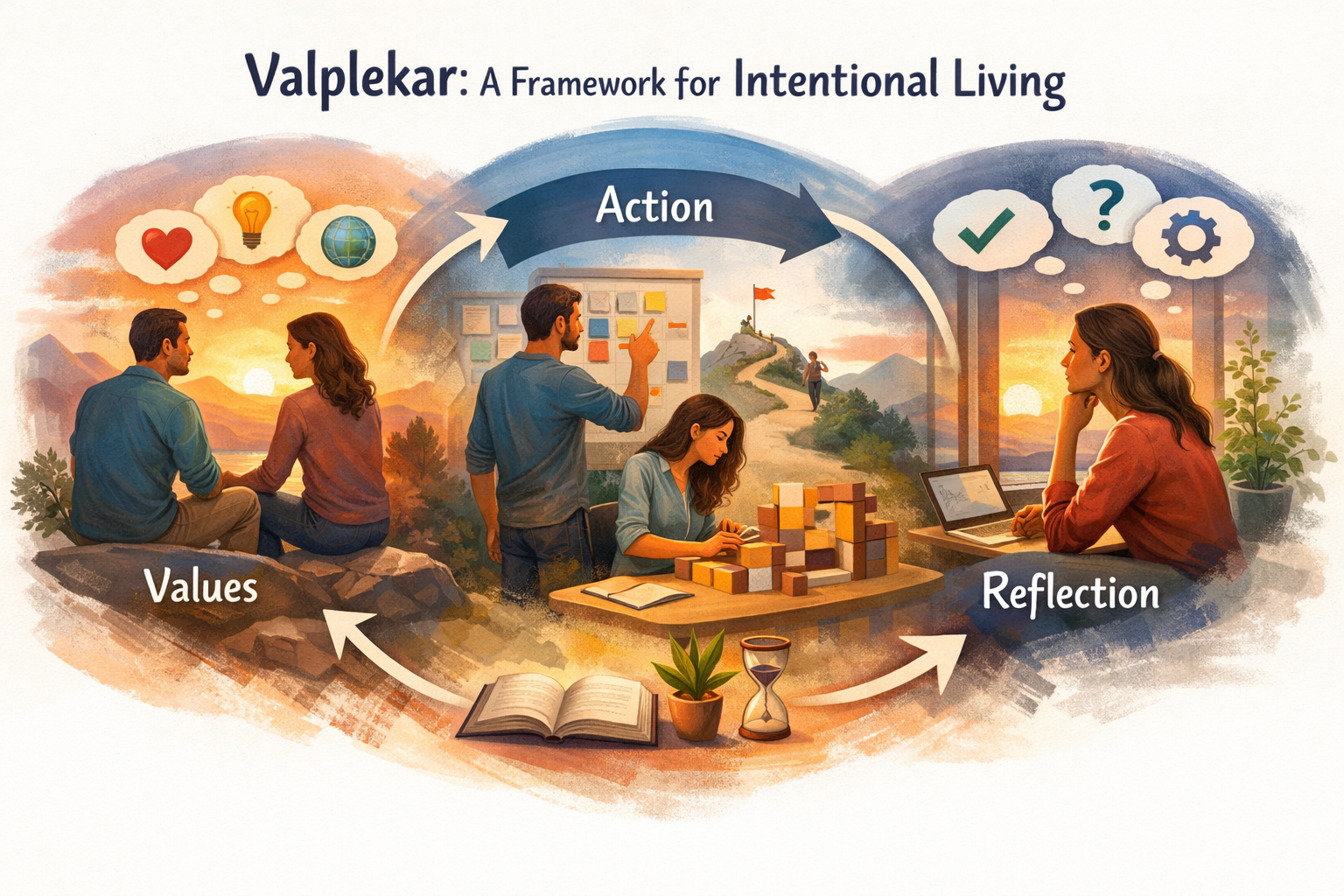
Valplekar can be understood as a living framework that connects values, actions, and reflection into a continuous cycle. Unlike goal-driven models that prioritize outcomes alone, valplekar emphasizes intentional movement—progress that feels coherent, grounded, and human.
Rather than asking only “What should I achieve?”, valplekar encourages questions such as:
- Does this action reflect what matters to me?
- What impact does it create beyond immediate results?
- What am I learning along the way?
This shift in questioning changes not only decisions but also the experience of growth itself.
The Thinking Behind Valplekar
Valplekar is rooted in practical wisdom rather than theory-heavy ideology. Its strength lies in how naturally it fits into real life.
Values as Anchors, Not Ideals
In valplekar, values are not abstract beliefs or motivational statements. They are anchors—reference points that guide everyday decisions. When values are clear, choices become less stressful and more consistent.
For example, someone who values autonomy will naturally design work and life choices that protect independence, even if it means slower external success.
Action as Exploration
Valplekar treats action as exploration, not execution. Every step taken is viewed as a test, not a final answer. This removes the fear of getting things wrong and replaces it with curiosity.
Progress becomes something you engage with, not something you chase.
Reflection as Intelligence
Reflection is not an afterthought in valplekar—it is the intelligence of the system. Pausing to interpret outcomes allows learning to compound over time instead of repeating the same mistakes in different forms.
The Core Structure of Valplekar
| Element | Purpose | Example in Practice |
|---|---|---|
| Values | Define direction and boundaries | Choosing meaningful work over status |
| Intentional Action | Translate values into behavior | Taking smaller, aligned steps |
| Reflection | Turn experience into understanding | Adjusting approach after feedback |
This simple structure makes valplekar flexible yet grounded.
Why Valplekar Matters in the Modern World
Too Much Speed, Too Little Meaning
Modern systems reward speed and visibility, often at the cost of depth. Valplekar restores balance by slowing decisions just enough to ensure they make sense.
Chronic Burnout and Disconnection
Many people are not tired because they work too much—but because they work against their values. Valplekar reduces this friction by aligning effort with intention.
Increasing Complexity
As life becomes more complex, rigid rules fail. Valplekar works because it adapts without losing direction.
Valplekar in Personal Life
Everyday Choices With Less Regret
When decisions are value-aligned, regret decreases—even if outcomes are imperfect. Valplekar helps people accept results with clarity instead of self-blame.
Sustainable Personal Growth
Rather than forcing constant improvement, valplekar allows growth to happen naturally through reflection and adjustment. Progress feels earned, not imposed.
Emotional Awareness and Balance
Reflection builds emotional literacy. People become better at understanding their reactions, needs, and limits.
Valplekar in Professional Life
Leadership With Integrity
Leaders guided by valplekar prioritize coherence over control. Teams trust decisions more when they understand the values behind them.
Better Strategic Thinking
Valplekar-based strategies remain flexible under pressure. When circumstances change, values provide stability while actions evolve.
Creativity Without Fear
Because mistakes are treated as information, people feel safer experimenting. This leads to more honest innovation.
Valplekar Across Different Fields
Education and Learning
Valplekar encourages learning that goes beyond grades or credentials. Students learn how to think, not just what to memorize.
Creative and Independent Work
For writers, designers, and creators, valplekar acts as a grounding force—protecting originality while avoiding burnout.
Community and Social Initiatives
Valplekar ensures that initiatives are driven by real needs, not surface-level impact or visibility.
A Practical Example of Valplekar in Action
Consider a mid-career professional feeling stuck despite external success. Through valplekar, they identify core values such as autonomy, contribution, and learning. They gradually reshape their role, take fewer but more meaningful projects, and reflect regularly.
Within a year, income may remain similar—but clarity, motivation, and satisfaction increase significantly. That shift is the quiet power of valplekar.
Common Misconceptions About Valplekar
“It’s Too Vague to Be Useful”
Valplekar becomes concrete when values are clearly defined. Vagueness disappears with honest reflection.
“It Slows Progress”
In reality, it prevents wasted effort. Fewer misaligned actions mean steadier forward movement.
“It’s Only for Personal Development”
Valplekar applies equally well to teams, organizations, and systems.
How to Start Applying Valplekar
You don’t need a full transformation.
- Identify three values that currently matter most
- Evaluate one upcoming decision through those values
That single step introduces valplekar into your thinking.
The Long-Term Impact of Valplekar
Over time, valplekar creates internal consistency. Decisions feel connected. Learning compounds. Life feels less reactive and more intentional.
Instead of chasing outcomes, people begin to build direction—and outcomes follow naturally.
Conclusion
Valplekar is not about doing more. It is about doing what matters, learning from it, and adjusting with honesty. By integrating values, action, and reflection, valplekar offers a grounded way to navigate complexity without losing yourself in the process.
In a world that constantly pushes for faster results, valplekar quietly reminds us that meaningful progress comes from alignment, not acceleration. Start small, stay reflective, and let clarity guide the way forward.
Frequently Asked Questions (FAQs)
1. Is valplekar a philosophy or a method?
Valplekar is best described as a flexible framework rather than a fixed philosophy or method.
2. Can valplekar be used in organizations?
Yes, it works well in leadership, strategy, and team decision-making.
3. Does valplekar require long-term planning?
No. It can be applied to both short-term choices and long-term direction.
4. How is valplekar different from goal-setting?
Valplekar focuses on alignment and learning, not just outcomes.
5. Can beginners apply valplekar easily?
Yes. Its simplicity makes it accessible without training or tools.

Mila Volovich: Life, Career, and Global Influence

TXCOVIDTEST Guide: Everything You Need to Know Today

Tiffany Pesci: Real Life Story, Career, and Where She Is in 2026

Lee Mack Wife Blind: Facts, Rumors, and the Truth Explained

Riverbank Collapse Iford Playing Fields: Causes, Impacts, and Recovery
