Health
Cellulogia: Understanding How Cells Work Together in the Body

Introduction
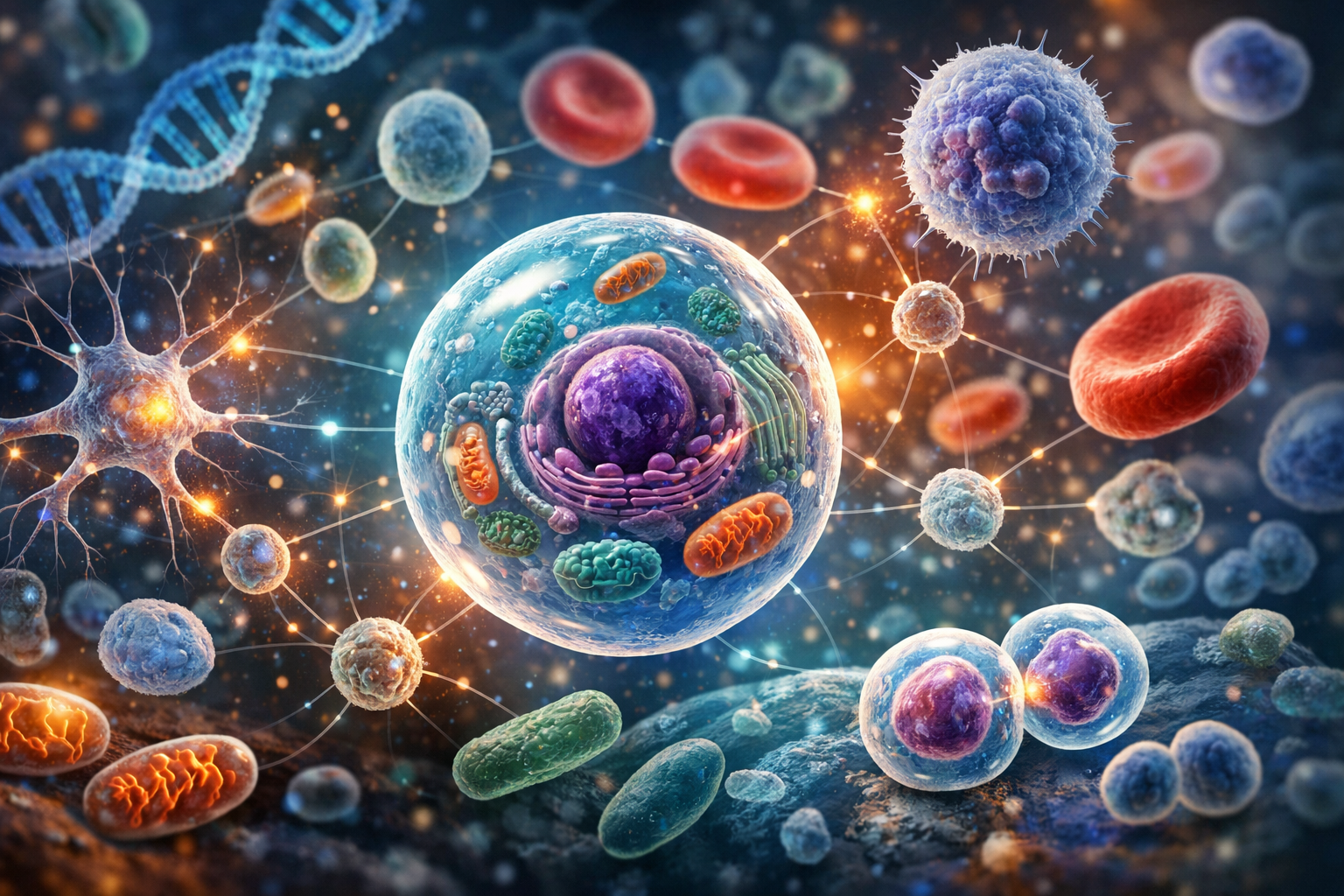
The human body is made up of trillions of tiny units called cells. These microscopic structures perform every essential function needed to keep us alive—from producing energy to repairing damaged tissues. The concept of cellulogia focuses on understanding how these cells interact, cooperate, and maintain balance within living organisms. Instead of viewing cells as isolated parts, cellulogia highlights the idea that life functions through cellular teamwork.
When cells communicate properly and perform their specialized roles, the body operates smoothly. However, when communication or coordination between cells is disrupted, health problems can arise. Studying cellulogia allows scientists and health experts to better understand how the body maintains stability, adapts to challenges, and repairs itself. This article explores the meaning of cellulogia, its biological foundations, its importance in health, and how it shapes our understanding of life at the cellular level.
Will You Check This Article:Çievri: A Modern Philosophy for Balanced Living
What Is Cellulogia?
Cellulogia refers to the concept of cellular coordination within living systems. It studies how cells interact with one another to maintain balance and support the functioning of tissues and organs. Rather than focusing solely on the structure of individual cells, cellulogia emphasizes the relationships between them.
In living organisms, no cell operates independently. Each cell sends signals, receives information, and adjusts its behavior based on the needs of surrounding cells. This constant exchange of information allows tissues and organs to work as unified systems.
For example, when the body experiences physical stress or injury, nearby cells quickly send signals to activate healing processes. Immune cells arrive to protect the affected area, while structural cells begin repairing damaged tissues. Through this cooperative process, the body restores balance and maintains health.
Cellulogia helps scientists understand these complex interactions by examining the ways cells communicate and organize themselves into functional networks.
How Cells Communicate With Each Other
One of the most important aspects of cellulogia is cellular communication. Cells constantly send and receive signals to coordinate their activities. These signals are usually chemical molecules that travel between cells and trigger specific responses.
For instance, when the body detects an infection, certain cells release signaling molecules that alert immune cells. These immune cells then move toward the infected area and begin fighting harmful organisms. This process happens rapidly and involves precise coordination among many different cell types.
Communication between cells also regulates growth and development. Cells must know when to divide, when to stop growing, and when to repair damaged structures. Signals guide these decisions so that tissues maintain the correct size and structure.
Without proper cellular communication, the body’s systems would lose coordination. Cellulogia studies these communication networks to understand how biological systems remain organized and responsive.
Cellular Specialization and Cooperation
Cells in the human body are highly specialized. Different types of cells perform different tasks depending on their location and structure. Muscle cells contract to produce movement, nerve cells transmit electrical signals, and blood cells transport oxygen throughout the body.
Despite these differences, all cells must work together to support the organism as a whole. This cooperation is a key principle of cellulogia.
Consider the heart as an example. Several types of cells contribute to its function. Muscle cells create the contractions that pump blood, electrical cells control the rhythm of the heartbeat, and blood vessel cells regulate circulation. Each group of cells performs a distinct role, yet they depend on one another to maintain a stable heartbeat.
Cellulogia helps researchers understand how such specialized cells coordinate their activities so that organs function efficiently.
The Importance of Cellular Balance
Living organisms constantly work to maintain internal stability. This stability is often referred to as biological balance. Cells play a central role in maintaining this balance by responding to changes in the body’s environment.
For example, when a person exercises, muscle cells require more energy and oxygen. The body responds by increasing heart rate and breathing rate. At the same time, metabolic cells release stored energy to support muscle activity.
These adjustments happen because cells communicate with one another and respond to signals that indicate changing needs. From the perspective of cellulogia, this process demonstrates how cellular coordination maintains balance throughout the body.
When cellular balance is disrupted, the body’s systems may struggle to function properly. Understanding how cells maintain equilibrium helps scientists identify ways to support overall health.
How Lifestyle Influences Cellular Function
Everyday habits can influence how well cells perform their tasks. Proper nutrition, regular physical activity, and sufficient rest all support healthy cellular activity.
Nutrients from food provide the raw materials cells need to produce energy and repair tissues. Vitamins, minerals, and proteins contribute to the maintenance of cellular structures and communication pathways.
Physical activity also affects cellular behavior. Exercise improves circulation, allowing oxygen and nutrients to reach cells more efficiently. This improved circulation supports cellular repair and energy production.
Sleep plays another critical role. During rest, cells repair microscopic damage accumulated throughout the day. Without adequate sleep, these repair processes become less effective.
From the perspective of cellulogia, healthy lifestyle habits help maintain the harmony between cells that keeps the body functioning properly.
Cellulogia and Scientific Research
Modern scientific research increasingly focuses on understanding how cells interact within larger biological systems. Scientists have discovered that many important processes—such as tissue growth, immune responses, and organ development—depend on coordinated cellular activity.
Advanced technologies now allow researchers to observe cellular interactions in greater detail than ever before. High-resolution imaging and molecular analysis reveal how cells organize themselves into networks and respond to environmental changes.
These discoveries align closely with the principles of cellulogia. By studying how groups of cells behave collectively, scientists gain deeper insights into how living systems operate.
Research in this area may lead to new medical treatments that support cellular coordination and help the body repair itself more effectively.
A Simple Way to Understand Cellulogia
To visualize cellulogia, imagine a large orchestra performing a complex piece of music. Each musician plays a different instrument and follows the same rhythm and conductor. If one musician plays out of sync, the entire performance is affected.
Cells behave in a similar way. Each cell type performs a specific role, yet all must coordinate their activities to maintain harmony within the body. When communication between cells remains strong, the biological system functions smoothly—just like a well-coordinated orchestra.
This analogy helps illustrate why cellulogia focuses on cooperation rather than isolated cellular activity.
Conclusion
Cellulogia provides a meaningful perspective on how life functions at the microscopic level. By studying how cells communicate, cooperate, and maintain balance, scientists gain a deeper understanding of the processes that support health and biological stability.
Cells may be incredibly small, but their collective actions create complex systems that sustain life. Every organ, tissue, and biological function depends on the coordinated efforts of countless cells working together.
As research continues to explore cellular networks and interactions, the ideas behind cellulogia will likely play an important role in expanding our understanding of biology and health. Recognizing the importance of cellular harmony reminds us that even the smallest parts of the body contribute to the larger picture of life.
Frequently Asked Questions (FAQs)
1. What is cellulogia?
Cellulogia is the concept that studies how cells communicate and cooperate within living systems to maintain balance and proper biological function.
2. Why is cellular communication important?
Cellular communication allows cells to coordinate activities such as growth, repair, and immune responses, ensuring that tissues function properly.
3. How does cellulogia relate to human health?
Healthy cellular coordination helps maintain stable body systems, support tissue repair, and regulate energy production.
4. Can lifestyle choices affect cellular function?
Yes. Nutrition, exercise, and adequate sleep help cells perform their roles efficiently and maintain balance within the body.
5. Why are scientists interested in cellular cooperation?
Studying cellular cooperation helps researchers understand how complex biological systems function and may lead to improved medical treatments.


Supermaked: The Local Shopping Market Transforming Everyday Convenience

Brandy Quaid: The Truth Behind the Name and Public Curiosity

Antonimar Mello: The Private Life Behind a Quiet Public Name

Lee Mack Wife Blind: Facts, Rumors, and the Truth Explained

Riverbank Collapse Iford Playing Fields: Causes, Impacts, and Recovery

Izzie Balmer Partner: Love, Privacy, and Public Life
-

 celebrity1 week ago
Peter Halsey Cook: Career, Marriage, and Life Journey
-

 Tech7 days ago
Exploring view:source:rockingwolvesradio.com Chatroom Code
-

 celebrity1 week ago
Ka Ho Cho: The Untold Journey of Redd Foxx’s Wife
-

 Life Style7 days ago
Sova App: Complete Guide to Daily Affirmations and Mindset Transformation
-

 celebrity6 days ago
Olivia Korenberg: Creative Designer Behind a Private Life
-

 celebrity1 week ago
Matthew Jay Povich: A Life of Privacy and Legacy
-

 celebrity1 week ago
Glena Goranson: Biography, Family, Marriage, and Life in 2026
-

 Education5 days ago
Sagerne: The Quiet Power of Shared Human Wisdom Today